The logo on your coffee cup may draw on a symbol that is over 3,000 years old. The wreath on a law firm's letterhead traces back to Ancient Greek athletics. The lion outside your bank has stood guard since Roman times. Symbols are everywhere in design and most of us use them every day without knowing why they work so powerfully.
In this insight, we explore some of the world's most enduring symbols: where they came from, what they really mean, and why that matters for brand identity design today.
In design, we often use imagery and symbolism to convey a particular meaning or emotion and to communicate our message. Symbolism has existed for thousands of years, dating back to ancient times, look at Egyptian hieroglyphics and even cave paintings. As humans, we have always told stories hrough art and added meaning to certain images and symbols; they have become a universal language of their own. Even today, we have a whole library of emojis at our fingertips which we use every day to express a specific meaning or emotion, understood globally no matter what language you speak.
So where did these meanings come from? How do we know that a heart symbolises love and a dove symbolises peace? There are so many interesting meanings behind some of these well-known symbols and most come from stories in ancient mythology or cultural beliefs originating thousands of years ago.
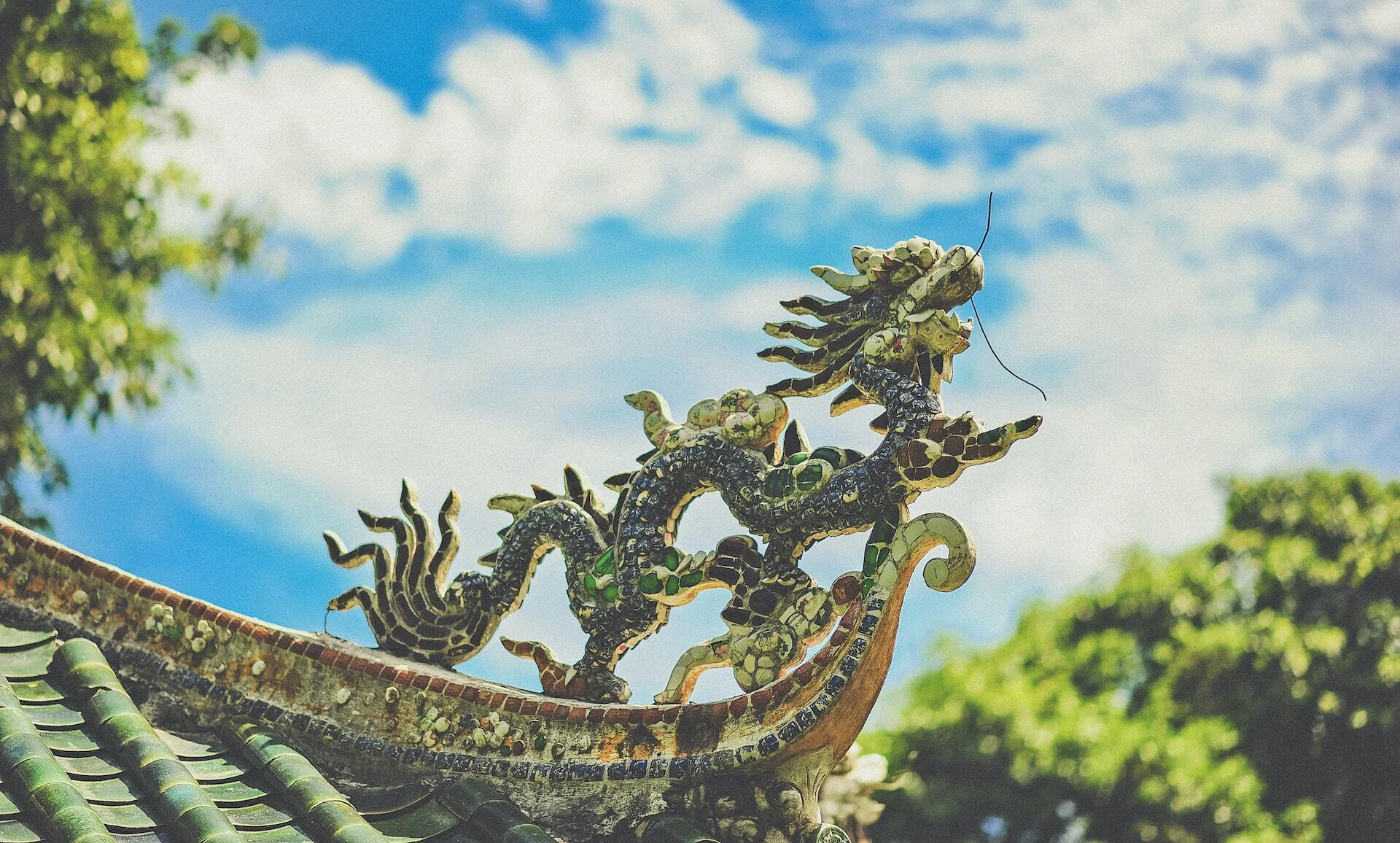
This insight was inspired by a recent trip to Vietnam. Visiting the many temples and historical places such as Hue, Hanoi and Hoi An,certain symbols appeared again and again in paintings and architecture:dragons, phoenixes and turtles were everywhere. After some research and conversations with local guides, it emerged that these hold important ancientVietnamese culture, as they are three of the four sacred animals (the fourthbeing a unicorn). The dragon represents the emperor and signifies power, nobility and immortality. The phoenix represents the empress and symbolises grace, virtue and pride. The turtle symbolises longevity, strength and intelligence. Finally, the unicorn symbolises peace, mercy and good fortune. These symbols date back thousands of years and are still used in Vietnam today.
Before people could write, symbols were used to represent words and concepts, which were often associated with cultural and religious beliefs. Ancient civilisations used symbols to embody their gods, beliefs and aspirations to communicate values, to worship and to connect with nature and family. Here are three that still appear in design today:
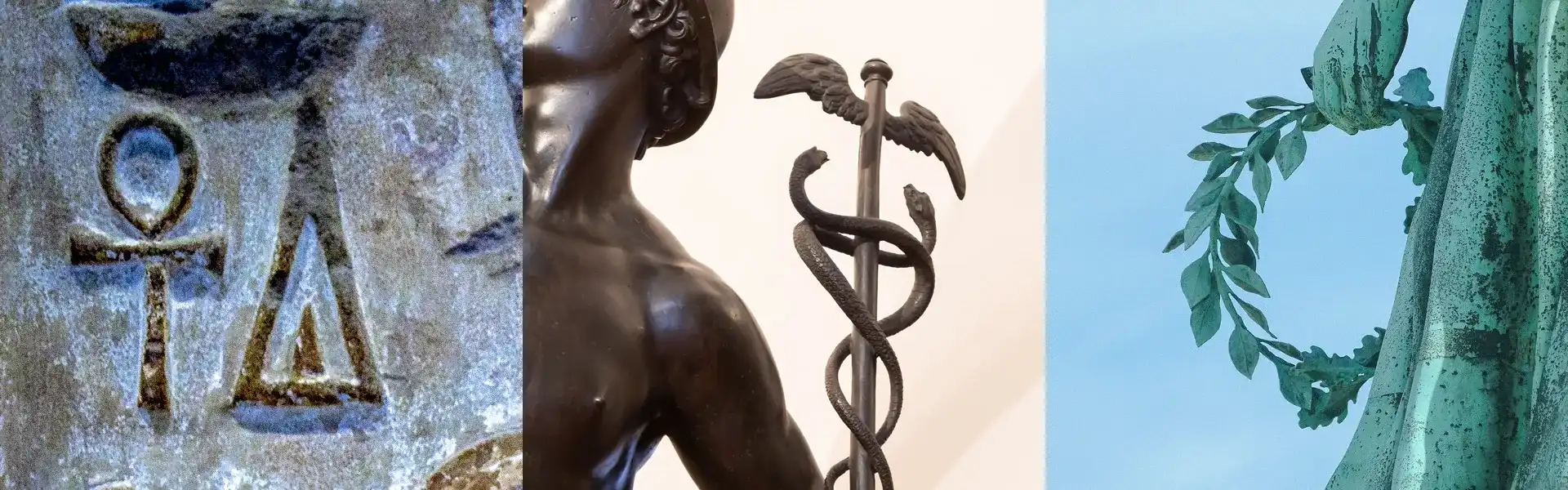
The Egyptian Ankh
The hieroglyph for 'life', and therefore a symbol of life itself. Often associated with the afterlife, it can be seen in tomb painting scarried by Egyptian gods and on amulets worn by pharaohs. It also inspired the Christian cross, both representing the idea of everlasting life.
The Greek Caduceus
The staff of Hermes, messenger of the gods. Originally symbolising peace, it later came to represent commerce and negotiation. Its depiction of a winged wand with two intertwined snakes is commonly confused with the medical symbol, the Rod of Asclepius - which has only one snake and belongs to the god of healing.
The Roman Laurel Wreath
Originating in Ancient Greece as the symbol of Apollo, awarded to Olympic winners and poets (hence "poet laureate"). In Rome it became a symbol of status worn by emperors. Today it still appears in graduation ceremonies in Italy, and in countless award, academic and corporate brand identities around the world.
Whilst most cultural symbols originate from ancient history, they are still widely used today; in fashion, jewellery, fabric design, book covers, souvenirs and tattoos. Their original meaning is sometimes lost, but the resonance remains. Here are three examples worth knowing:
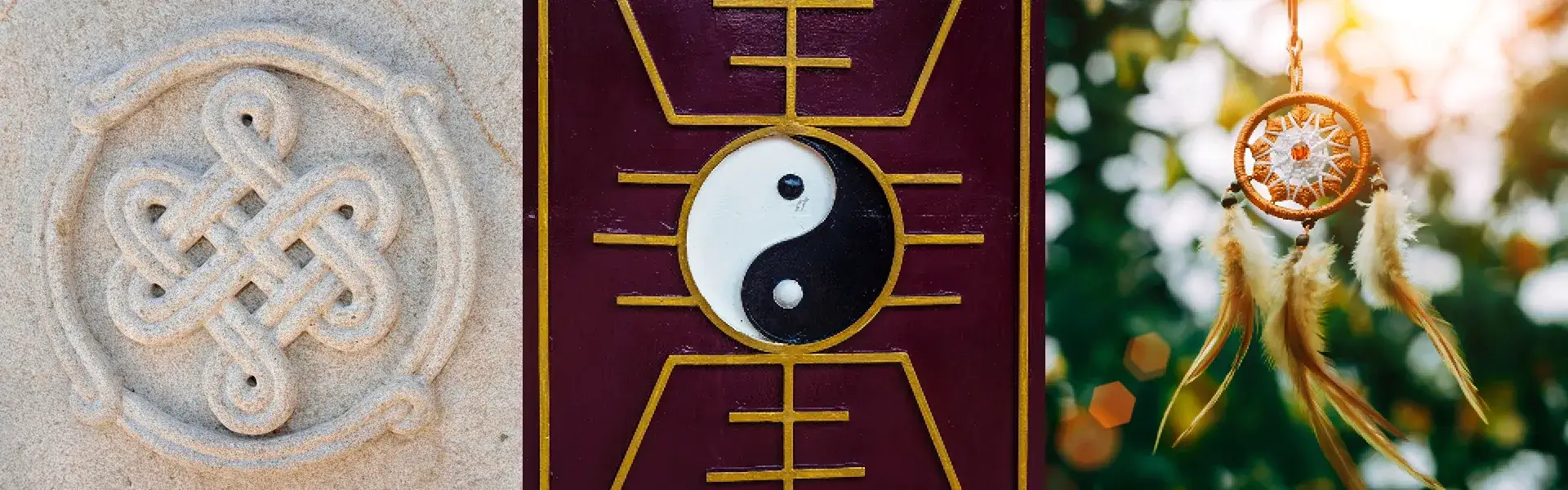
Celtic Knot
Strongly associated with Irish culture, Celtic Knots resemble the eternity of life: no start, no end. The Trinity Knot (Triquetra), with its three arches, symbolises life, death and rebirth - or mind, body and spirit. It later became linked with the Holy Trinity in Christianity, demonstrating how symbols cross cultures and acquire new layers of meaning over time.
Yin-Yang
The ancient Taoist concept that the world is made up of opposite but interconnected forces. Yin (dark, cold, feminine) and Yang (light, warm, masculine) exist in harmony, each containing part of the other. This philosophy of cosmic duality underpins many Chinese teachings and today informs medicine, martial arts and Feng Shui. In design, it is one of the most immediately recognisable symbols of balance in the world.
Dreamcatcher
Originating from the Ojibwe tribe, these were protective talismans hung above children's beds. Bad dreams were caught in the web and destroyed by sunlight; good dreams passed through. The circular frame represents the circle of life; the web echoes the belief in a Spider Woman as Mother Earth. Today dreamcatchers are a symbol of unity across many Native American communities.
Animals have featured in art since the earliest cave paintings. Many carry rich symbolic significance across multiple cultures which is why they appear so frequently in crests, logos and brand identities:
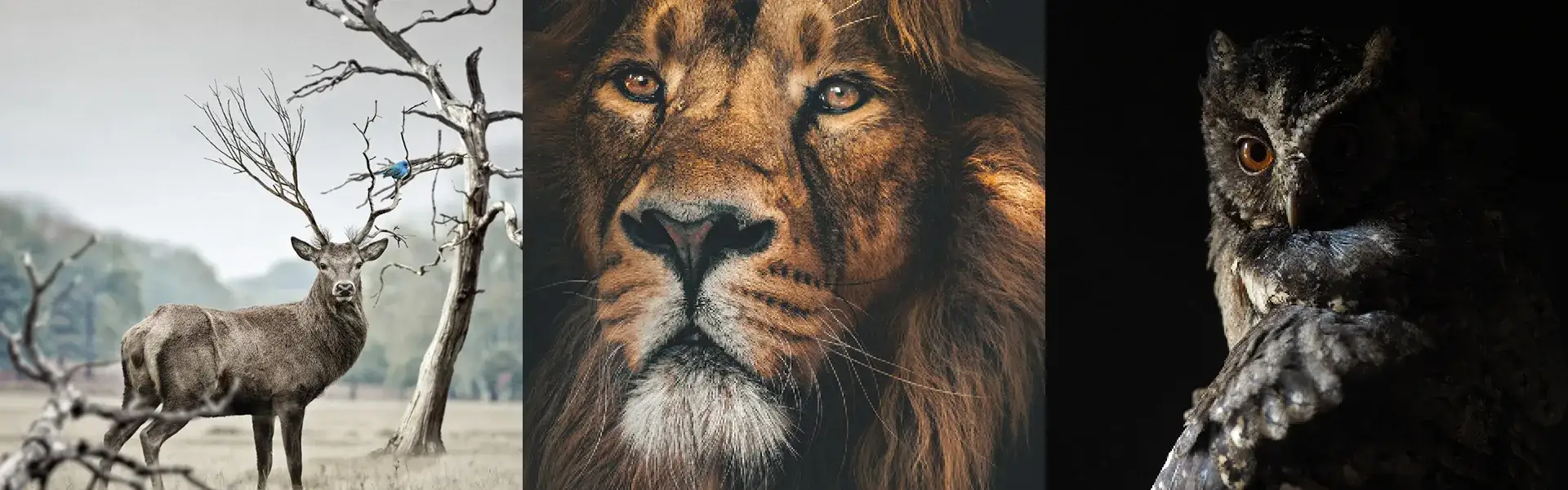
Stag
A symbol of power, strength and leadership across many cultures. In Celtic belief, the stag's antlers represented the branches of the World Tree, linking earth with spiritual realms. In Christianity it is associated with Christ and righteousness. Because a stag sheds and regrows its antlers each year, it also symbolises renewal. Making it a popular choice for brands that want to communicate growth and transformation.
Lion
The archetypal symbol of power, courage and protection. Statues of lions have guarded the entrances to temples and public buildings for centuries. As the zodiac sign Leo, the lion is associated with the sun, loyalty and commanding presence. Its enduring use in corporate logos, from banks to football clubs, is a testament to how consistently this symbol communicates authority.
Owl
A symbol of wisdom, knowledge and mystery across cultures. In Native American tradition, owls were believed to be the spirits of ancestors. In Ancient Egypt, they guarded the passage between the living world and the underworld. In Japanese and Chinese culture, the owl is instead a symbol of good fortune and protection. The same creature, radically different meanings, which is exactly why understanding symbolism matters when designing for a global audience.
Nature has always been a rich source of symbolic meaning, often linked with spirituality and religion. Here are three symbols you encounter almost daily in art, literature and emoji - and what they really mean:
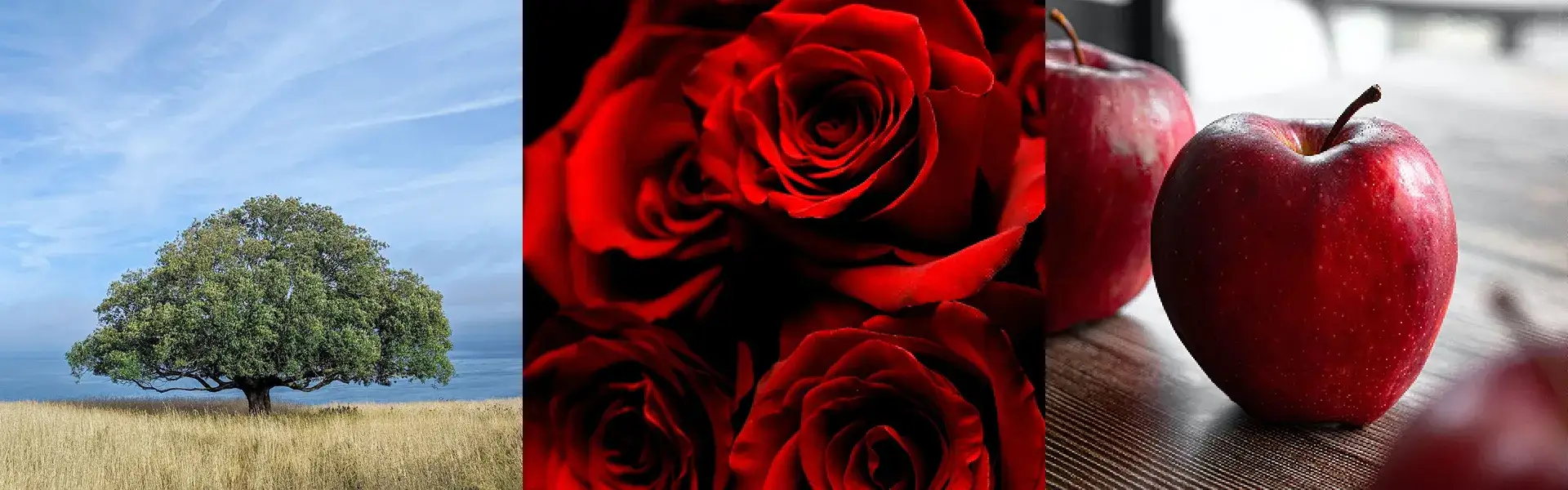
Oak Tree
A symbol of wisdom, strength, stability and endurance, considered sacred in many cultures. In Ancient Greece and Rome, Zeus/Jupiter was believed to communicate his wisdom through the oak. Because oaks live for hundreds of years, they represent resilience and commitment. Oak is even the traditional gift for an 80th wedding anniversary.
Rose
Synonymous with beauty, love and passion, with meaning varying by colour: red for love and passion, white for purity, yellow for friendship and joy, pink for gratitude. In medieval culture the rose became the symbol of England, a meaning that has endured across centuries of brand and national identity.
Apple
Featured in fairytales, mythology and religious texts (Snow White, Adam & Eve, Norse and Greek mythology alike), the apple has become synonymous with desire, knowledge, youth and forbidden fruit. Its adoption by one of the world's most recognised technology brands is no accident.
Symbolism in design is more than aesthetics. Each image carries a deeper meaning rooted in mythology and folklore, many thousands of years old. Even when we are no longer aware of a symbol's origins, we intuitively understand its meaning and continue to use these symbols in art and design today. As the saying goes, a picture is worth a thousand words - and nowhere is that truer than in visual symbolism and brand identity design.
At WDC Brands, the meaning behind imagery and symbolism is central to how we approach brand identity and design. Creating visual systems that communicate at a deeper, more resonant level. If you are curious how this thinking can be applied to your brand, we would love to hear from you.
Created on
September 12, 2023
Last updated on
May 26, 2026