
“We need a new web page.
Most B2B businesses ask for a new website, or a refreshed logo, or a better-looking proposal template. These are real needs, but they are usually symptoms of a deeper problem: the brand's core assets have come apart. A brand system fixes that.
After 500+ B2B brand projects, we see the same pattern. Guidelines get signed off. Six months later the sales team has their own deck, marketing feels like a different company and the website no longer matches the proposals.
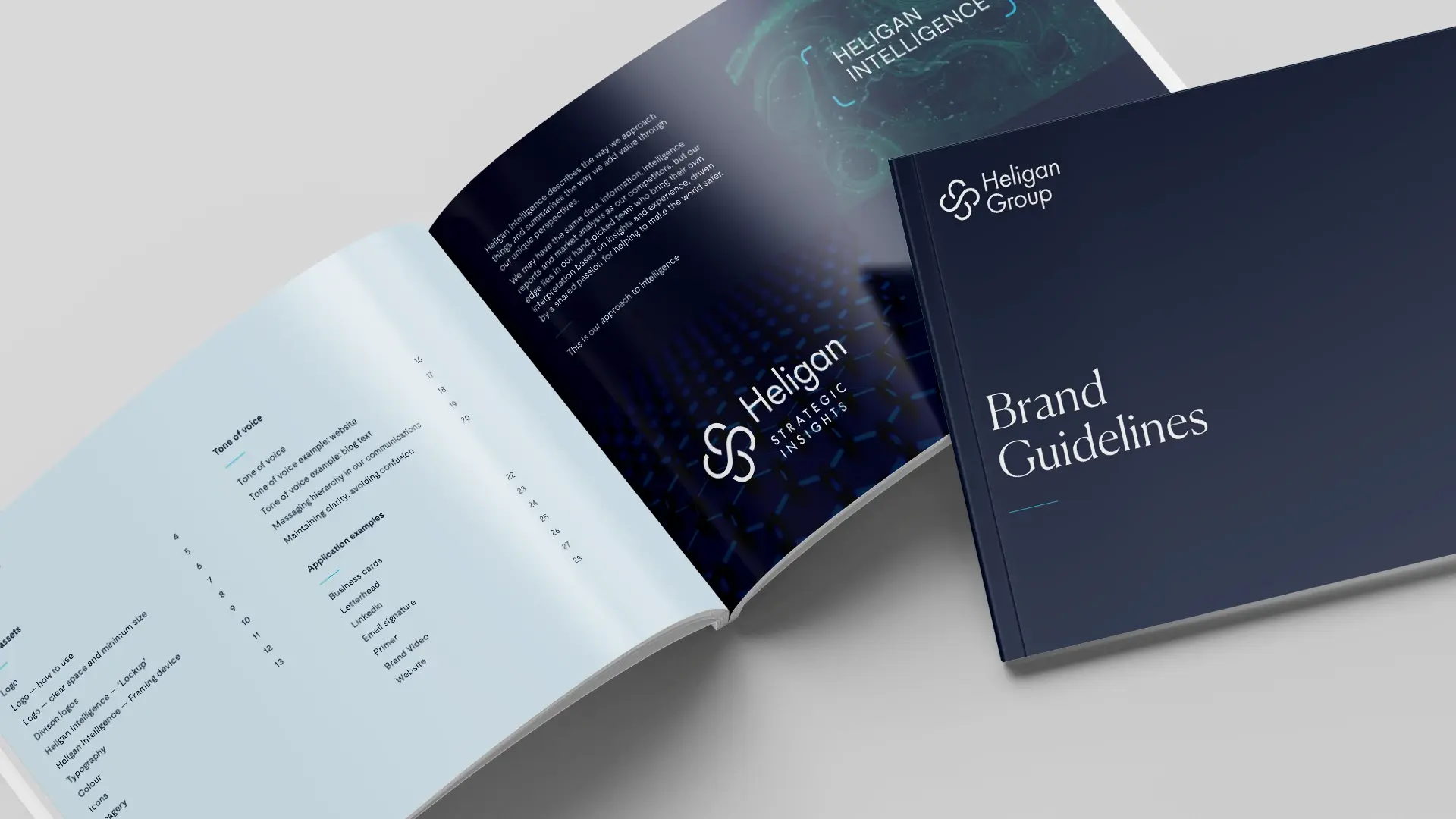
Brand guidelines tell people what the brand looks like. A brand system gives them everything they need to use it.
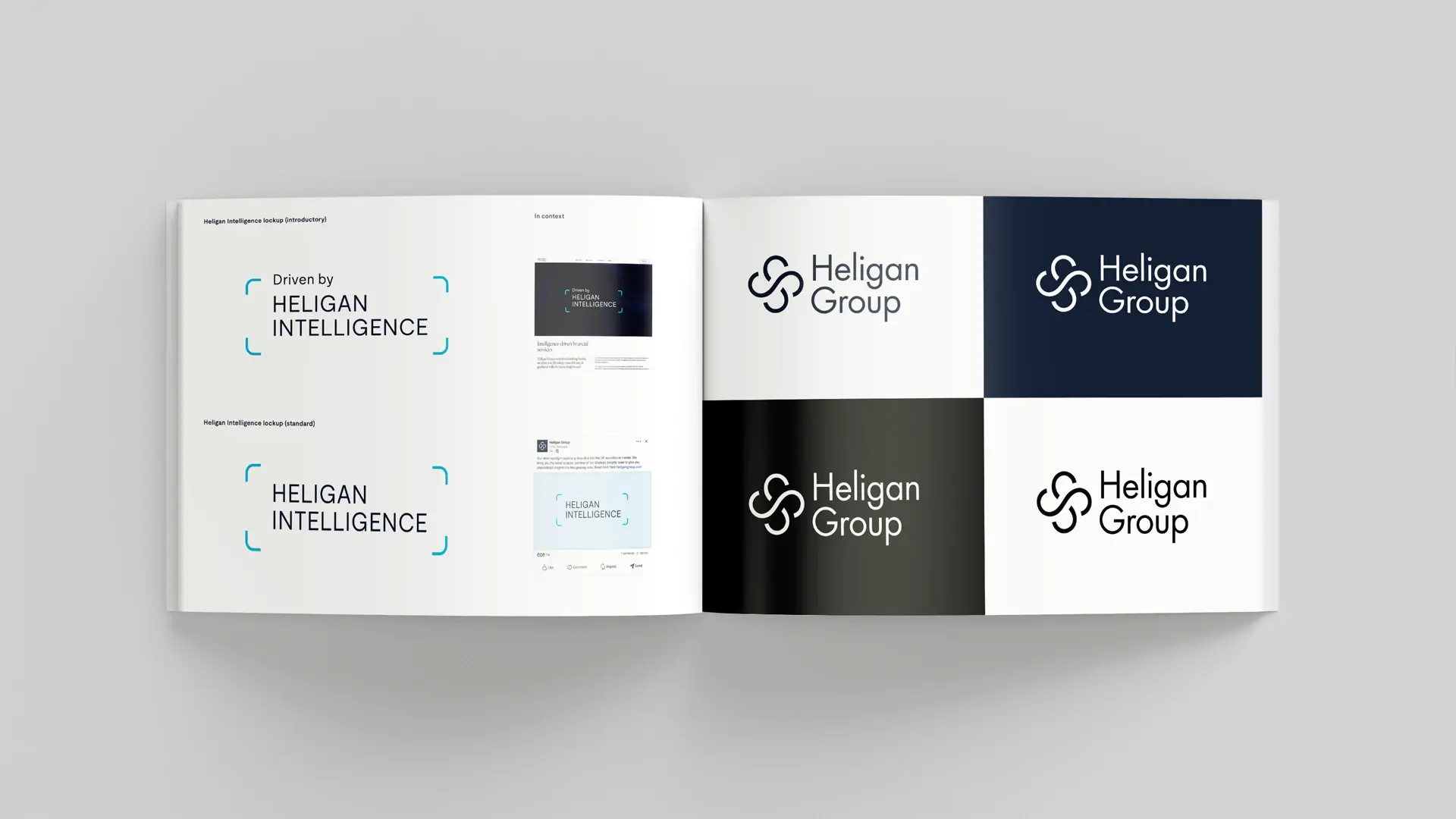
A brand system is the complete set of strategy, messaging, design and governance that enables your firm to show up consistently across every touchpoint, for every team member, under real working conditions. A brand guide documents decisions. A brand system operationalises them. A 60-page PDF is comprehensive. It is not usable by a bid manager who needs to build a proposal in two hours. A Figma file full of components is thorough. It is not useful to a consultant who works only in PowerPoint. A brand system meets your people where they actually work.
A logo introduces you. A system scales you.
In professional services, financial services and technology, credibility is built across proposals, meetings, websites, follow-up emails and RFP responses. If those touchpoints do not work together, performance suffers - regardless of how good the logo looks.
A full brand system has three layers. Most firms only build the first.
Layer 1
This is what most people mean when they say 'brand'. Necessary, but not sufficient on its own.

Layer 2
This makes your brand sound consistent, not just look consistent. B2B buyers research independently across multiple touchpoints before making contact. Inconsistent messaging breaks the trust you are trying to build.
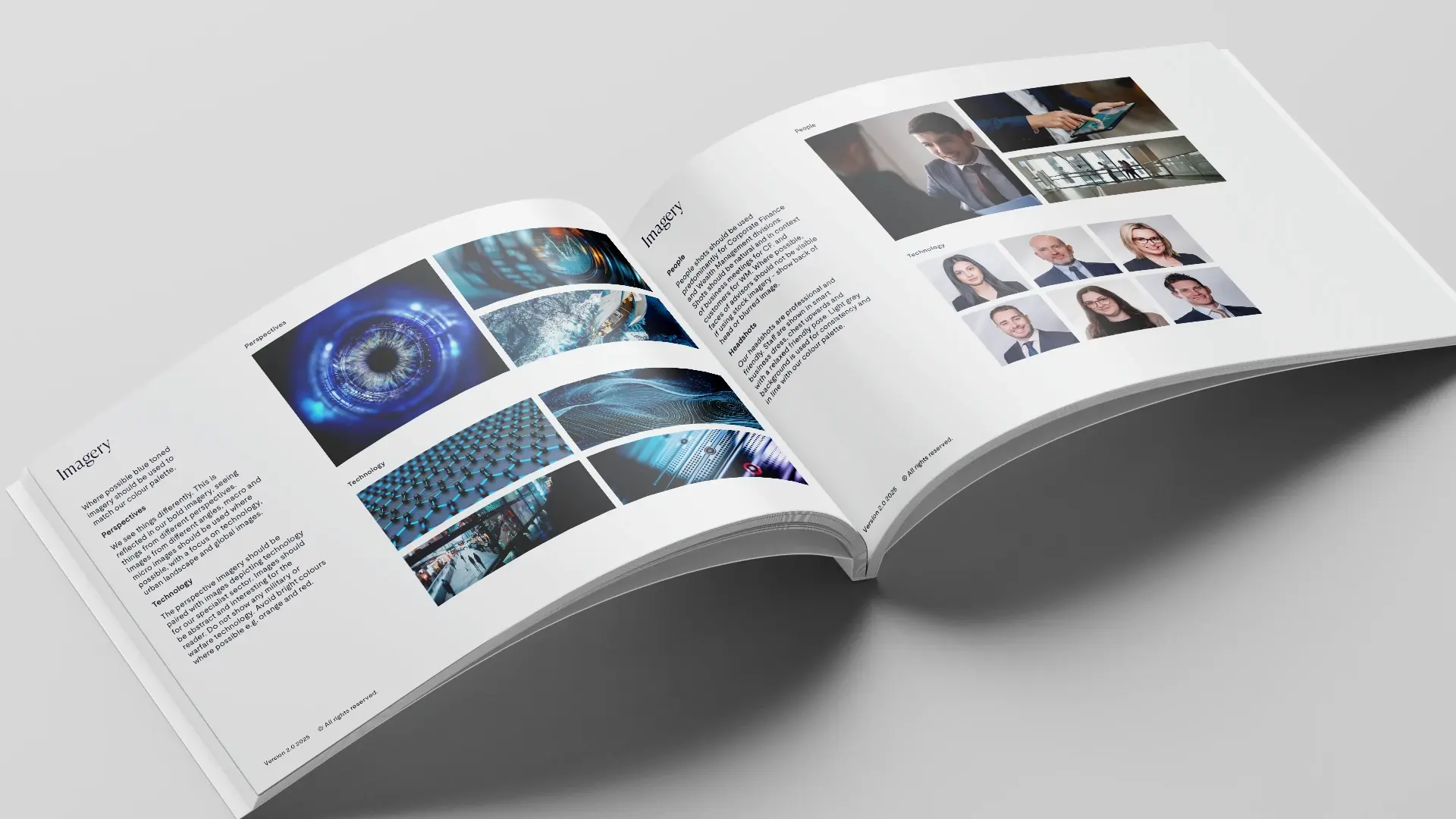
Layer 3
Templates, tools and governance
This is where most brand projects fail. The assets exist but nobody uses them. The system should reduce the effort required to be on-brand, not increase it.
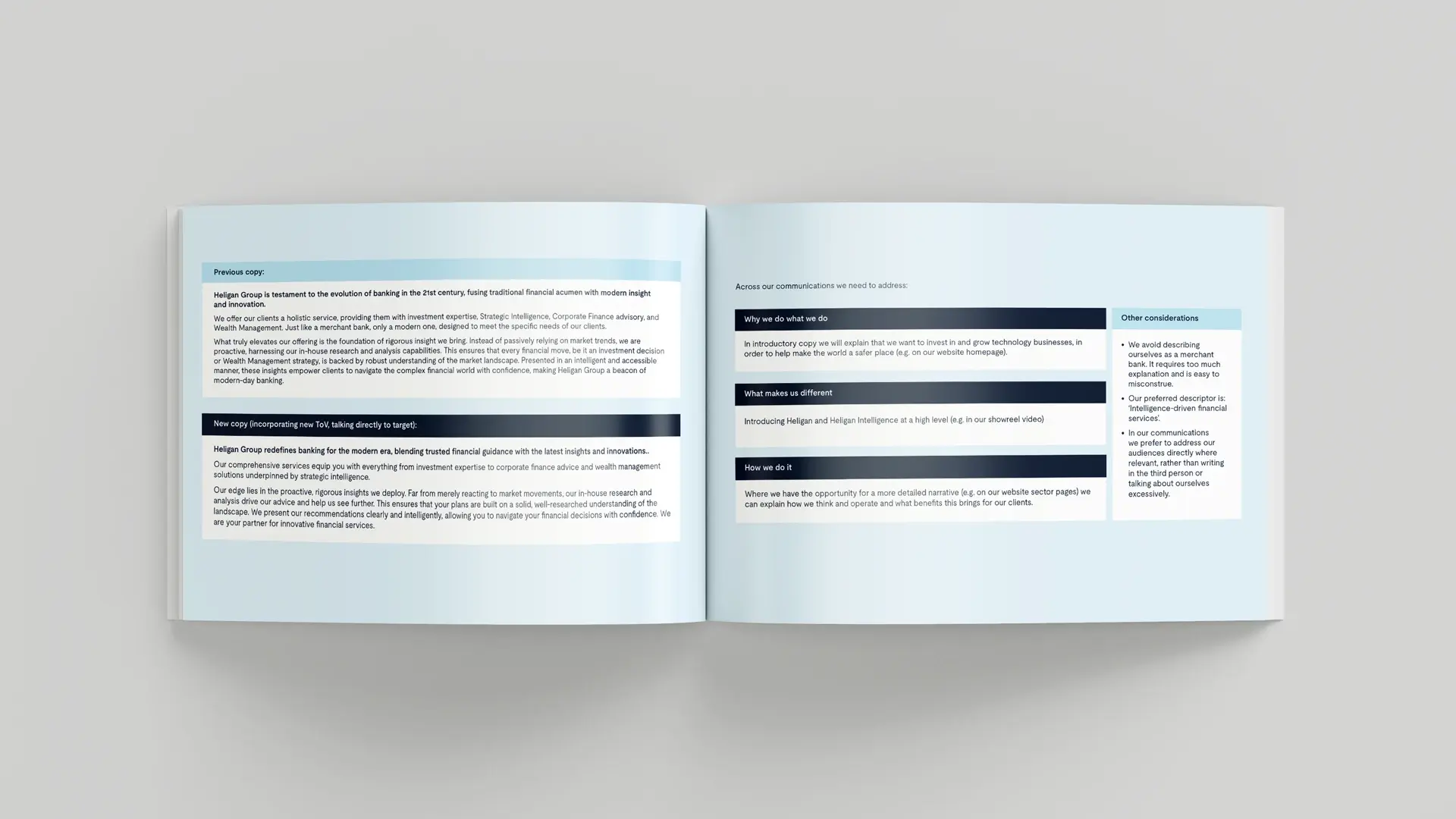
Brand guidelines say:
A brand system does:
The test
Can your most time-pressured colleague produce something on-brand without asking anyone for help? If not, you have guidelines. You do not yet have a system.
B2B buyers are not passive. Before they speak to a supplier, they research independently. They read case studies. They look at LinkedIn. They pass a proposal around a buying committee. Every touchpoint either builds credibility or undermines it.
Brand fragmentation is where different teams produce materials that feel like they come from different companies. This is not a cosmetic problem. It signals operational inconsistency to the buyers you are trying to win.
A well-built brand system creates speed, consistency, confidence and scalability. It works for 20 people today and 200 people in three years.
The goal is not a brand that looks good in a PDF. It is a brand your teams can use at speed, under pressure, every day.
Most brand projects fail at the handover. The work looks good. The guidelines are thorough. Three months later, the team is back to their old templates because the new system was designed for designers, not for the people who actually produce content day to day.
We build brand systems differently, using our established FLEX methodology.
The process starts with research. Into your buyers, your market position and how your teams work under real conditions. Strategy informs every design decision that follows.
Design and messaging are developed together. Visual direction and positioning are shown in context from the start: how does this brand look on a bid document? What does it sound like in a follow-up email? Seeing real application early means better decisions and fewer revision rounds.
Development happens on live work. Actual case studies, service pages and social content, not placeholder copy. The system is stress-tested before it is handed over.
Handover includes templates built for the environments your team works in. That means PowerPoint, Word, email signatures and anything else that your people use at speed and under pressure.
After delivery, we stay involved. We measure template adoption, track performance and refine the system as your business grows. Brand is a commercial investment. We treat it as one.
Ready to build a brand that works as hard as your team? Let talk!
Created on
November 19, 2025
Last updated on
May 27, 2026
